

Motor Finance
Johnson V FirstRand Supreme Court Day 1 Analysis
The landmark car finance mis-selling case kicked off its opening day with intense debate surrounding undisclosed commissions — a case set to reshape consumer financial rights across the UK.
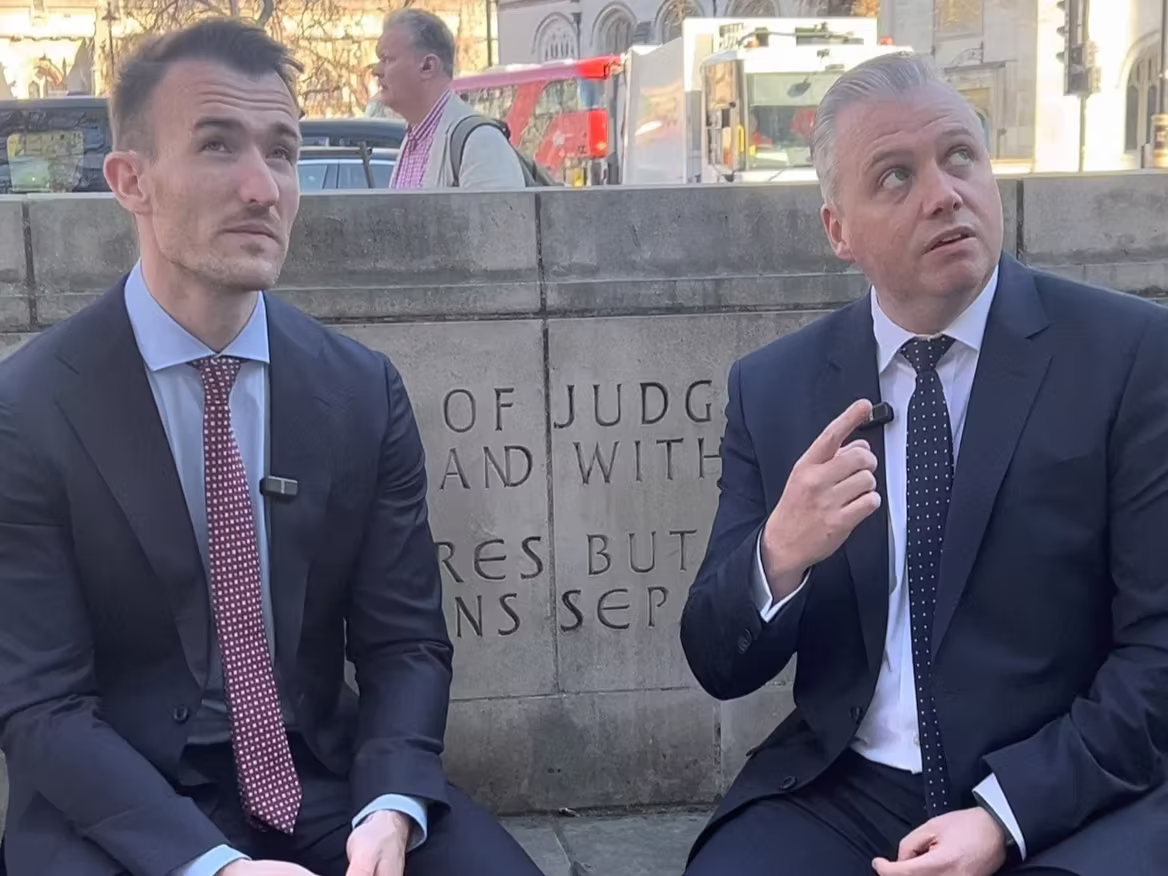
What is Johnson v FirstRand About?
Johnson v FirstRand revolves around allegations that major car finance lenders, including FirstRand Bank (trading as MotoNovo Finance) and Close Brothers, failed to disclose commissions paid to car dealers who were acting both as car dealers and credit brokers. These undisclosed commissions, according to the Court of Appeal's previous judgment, breached fiduciary duties and constituted bribery under consumer finance law.
Why is Johnson v FirstRand Important for Consumers?
This Supreme Court case addresses critical issues of transparency, fairness, and consumer protection within the motor finance industry. If upheld, the Court of Appeal's judgment could significantly improve the legal protections for consumers against hidden commissions and unfair financial agreements.
Banks Challenge Fiduciary Duties and Bribery Claims
On day one of Johnson v FirstRand, car finance lenders vigorously contested the Court of Appeal's ruling. FirstRand and Close Brothers argued against imposing fiduciary responsibilities on car dealers, asserting that such duties were inappropriate in purely commercial transactions. They claimed commissions paid to dealers are standard practice and should not be viewed as dishonest or equivalent to bribery.
Supreme Court Rigorously Examines Arguments
Throughout the session, Supreme Court Justices engaged deeply with the arguments presented, posing detailed and probing questions. Their queries reflected careful consideration of the broader implications for consumer rights and financial transparency, clearly indicating a cautious approach to overturning established consumer protections.
Crucial Omission Strengthens Consumers' Position
Significantly, the car finance lenders chose not to challenge Section 140A of the Consumer Credit Act (CCA), a critical statutory protection ensuring fairness in credit agreements. By leaving this consumer safeguard unchallenged, the banks inadvertently bolstered the strength of consumer claims under statutory fairness provisions.
What's Next in Johnson v FirstRand?
As Johnson v FirstRand progresses, the outcomes will have far reaching implications for thousands of UK consumers involved in motor finance agreements. Sentinel Legal will continue providing comprehensive updates, expert analysis, and insights into this landmark case.